
Who decides whether a NSW tree can come down?
Two layers work together. Chapter 2 of the State Environmental Planning Policy (Biodiversity and Conservation) 2021 sets the rules for clearing trees in urban areas, including all of Newcastle, the listed Metropolitan Sydney councils and residential zones statewide. Then each council's development control plan (DCP, its local planning rulebook) says which trees on private land need approval.
Because the DCP holds the detail, councils a few streets apart can give different answers. Ryde, for one, declares all vegetation in the city protected and then lists exemptions. NSW Planning's own advice is that you generally need council permission to clear trees, even on your own property.
A development application (DA) replaces the permit when the tree is a heritage item, sits in a heritage area, is on a significant tree register, or the removal is part of wider building work. Farming land runs under a separate framework through Local Land Services.
What changed in NSW in 2026?
- Dead and dying trees. Pruning or removing a protected tree that's dead or dying now needs a council permit or Native Vegetation Panel approval. The old exemptions no longer apply, which NSW Planning says stops people poisoning a tree and removing it once it dies.
- The risk exemption. A tree only comes down under it if the council agrees it's an imminent safety risk, such as heavy, unstable branches, and confirms that in writing before work starts.
- Tiered penalty notices. NSW Planning lists penalty notices of $3,000 for individuals and $9,000 for corporations, rising to $6,000 and $18,000 for prescribed high-value vegetation such as larger trees.
- Vegetation orders. Authorised officers can pause clearing on the spot while they check approvals, or order replanting.
How big are the penalties, and what's only proposed?
A conviction for clearing protected trees without authorisation carries a maximum penalty of $1 million for an individual and $5 million for a corporation. In the Local Court the ceiling is 1,000 penalty units, currently $110,000.
On 20 October 2026 the government announced proposed civil penalties of up to $500,000 for individuals and $2.5 million for corporations. The Bill went into Parliament on 21 October 2026 and wasn't finalised when we checked, so treat those amounts as a proposal, not the law.
How do I find out what applies at my address?
Read your council's tree page
We've written up councils including Hornsby, Northern Beaches and Wollongong, and the rest are listed below.
Ask what sits over the block
Heritage listings and significant tree registers send a tree down the DA path. Ask whether either applies before you get quotes.
Leave street trees to the council
A tree on public land, such as the nature strip, needs approval before anyone works on it. See our street trees guide.
Get the answer in writing
Above all for a dead tree or one you think is dangerous. Under the 2026 rules, the council's written word is what lets work begin.
What can I do about my neighbour's tree in NSW?
Neighbour tree and hedge disputes go to the Land and Environment Court under the Trees (Disputes Between Neighbours) Act 2006, for trees on private land in an urban zone. The Court deals with trees causing, or likely to cause, damage or injury, and hedges over 2.5 metres that severely block sunlight to a window or a view from a home.
For overhanging branches, Legal Aid NSW says you may be able to cut back to the boundary line, after checking with the council. The cuttings still belong to your neighbour, so hand them back. If talking fails, the Court calls mediation effective, and an application has to be served on the neighbour and the council at least 21 days before the preliminary hearing. Our neighbours' trees guide walks through it.
Does the 10/50 rule let me clear trees near my house?
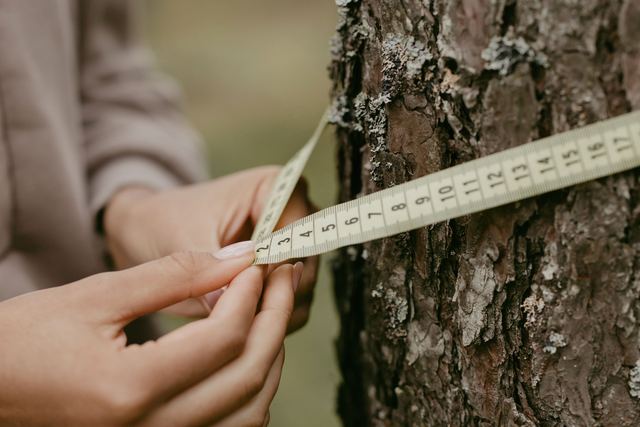
Only where the RFS online tool says your address is in a 10/50 entitlement area, checked on the day you clear. Inside one, the RFS says you can clear trees within 10 metres of a home, and shrubs (not trees) within 50 metres, without seeking approval. A tree only qualifies if part of its trunk, more than 30 centimetres around at 1.3 metres up, is within 10 metres of the external wall.
The Code stops at your boundary, heritage listings, section 88B covenants, consent conditions and slopes over 18 degrees, and it never covers clearing around power lines. Read our 10/50 rule guide before relying on it.
What if the tree is near a power line?
Don't touch it or try to prune it. If any part of a branch is touching a line, SafeWork NSW says the whole branch may be live. Keep everyone clear and call the network: Ausgrid (Sydney, the Central Coast and the Hunter Valley), Endeavour Energy (Sydney's Greater West, the Blue Mountains, the Southern Highlands, the Illawarra and the South Coast) or Essential Energy (regional NSW). Stay at least 8 metres from a fallen line. SafeWork NSW's code, in force since 22 May 2026, says an ordinary person should not cut branches that might come within 3 metres of electric lines.
Who keeps trees clear of the line to my house?
It depends on the network. Ausgrid says you clear your own tree up to your boundary and it handles a neighbour's tree near your wire, while Endeavour Energy says trees on your property are yours to keep clear. Our power lines guide has more.
A tree came down in a storm. Now what?
If anyone is trapped or injured, call 000. The NSW SES takes calls when a fallen tree blocks a road, door or driveway, or a tree may fall on your property. NSW SES says not to try removing trees or branches yourself. For a damaged tree still standing, ask the council about the imminent risk exemption before anyone cuts.
Tree removal permits and rules in New South Wales: what to do next
We'd ring the council before booking anyone and ask two things: is this tree protected under the DCP, and is there a heritage or register listing over the block? We'd want both answers by email. If the tree is dead or looks dangerous, we'd still apply, because since 2026 that's the rule rather than a formality. And if the council wants an arborist report, we'd get it before lodging.
Want an arborist to look at it?
Tell us the job and your postcode, and a local arborist calls you to talk it through.