
Who protects trees in Victoria?
There's no single state tree law. The National Trust says Victoria has no specific state law for tree protection, and that the main tools are the zones and overlays (mapped planning controls) in each council's planning scheme. The council usually assesses the permit.
Many councils add a local law on top, and it runs separately. Boroondara's Tree Protection Local Law 2024 needs a permit to remove a canopy tree even when it's dead or a recognised weed. Local laws change too, such as Frankston's new Tree Protection Local Law 2026.
Which planning control might cover my tree?
| What needs a permit | Where it applies | |
|---|---|---|
| Clause 52.37 canopy trees | Removing, destroying or lopping a canopy tree (only boundary ones where there's a house) | Mixed Use, Township, Residential Growth, General Residential, Neighbourhood Residential, and Housing Choice and Transport zones |
| Vegetation Protection Overlay (42.02) | The vegetation named in the council's schedule | Land the overlay is mapped over |
| Significant Landscape Overlay (42.03) | The vegetation named in the council's schedule | Land the overlay is mapped over |
| Environmental Significance Overlay (42.01) | Any vegetation, dead included, unless the schedule says otherwise | Land the overlay is mapped over |
| Heritage Overlay (43.01) | Trees, where the schedule says tree controls apply | Listed heritage places |
| Clause 52.17 native vegetation | Native vegetation, dead included, unless a listed exemption applies | Statewide, with exemptions (one is for sites under 0.4 hectares) |
What changed with the canopy tree rule?
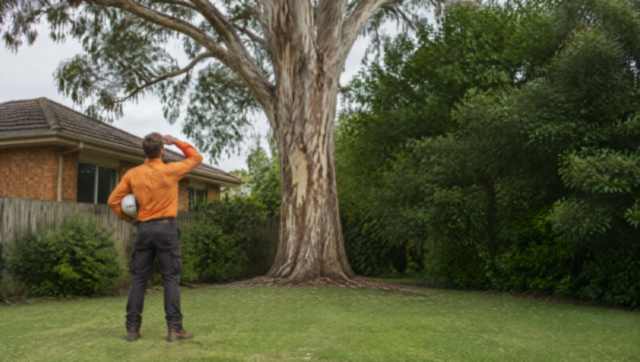
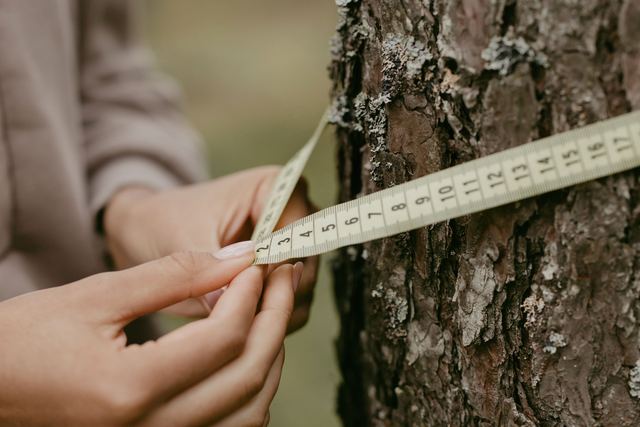
Clause 52.37 went into every Victorian planning scheme on 15 September 2025 (amendment VC289), and amendment VC315 rewrote it on 24 September 2026. A canopy tree is now one at least 5 metres tall with an average canopy diameter of at least 4 metres. The old trunk test (more than 0.5 metres around at 1.4 metres) is gone, so ignore any page that still quotes it.
On a block with a house, the permit covers boundary canopy trees: any part of the trunk within 6 metres of the narrowest street frontage or 4.5 metres of the rear boundary. On a vacant lot in those zones, it covers every canopy tree.
If health or stability is the reason, the application needs an assessment by a suitably qualified person. It runs as VicSmart, a fast-track permit with no public notice, and the council weighs any canopy trees removed from the site in the past 12 months. The clause has its own exemption list, but it only answers for 52.37. An overlay or local law can still catch the same tree.
How do I check my address?
Look it up on VicPlan
The Department of Transport and Planning's VicPlan shows the zones and overlays for any Victorian property and can produce a planning property report.
Read the overlay schedule
Each Vegetation Protection Overlay has a council schedule saying what vegetation it protects and why. Significant Landscape Overlays work the same way.
Ask the council about local laws
Ask whether a tree local law or a council significant tree register applies as well. Our pages cover Whitehorse, Glen Eira, Banyule and the other councils listed below.
Get it in writing
The Victorian Government tells residents to ask the council whether a tree is protected, because a permit can be needed even to cut it back.
Are significant trees protected?
Only through a council. The National Trust has classified more than 15,500 trees in over 1300 places since 1982, but it has no statutory power to protect them. A tree gets legal protection when a council lists it through an overlay or local law, or a Heritage Overlay applies. See our significant trees guide.
Can I cut my neighbour's overhanging branches in Victoria?
Generally yes, up to the boundary and at your own cost, which is called the right of abatement. Check with the council first, since a protected tree can need a permit even to be cut back. Unless you agree otherwise, the cut branches and leaves go back to your neighbour, because they're still theirs, and you're liable for any damage you do to the tree.
Councils won't settle a dispute unless the tree is on council land. The Dispute Settlement Centre of Victoria offers mediation. After that, either neighbour can take a nuisance claim to the Magistrates' Court, which Victoria Legal Aid warns can be slow and expensive.
Bushfire clearing: the 10/30 rule
Victoria's bushfire exemptions sit in clause 52.12. In a designated bushfire prone area, the 10 m rule allows clearing any vegetation, trees included, within 10 metres of an existing building used for accommodation, and the 30 m rule allows clearing vegetation other than trees out to 30 metres. A 50 m rule for non-tree vegetation applies only inside the Bushfire Management Overlay.
The dates matter. The 10 m and 30 m rules only cover buildings built or approved before 10 September 2009, or rebuilt after a bushfire loss between 1 January and 31 March 2009. Clause 52.12 overrides planning scheme permits but not covenants, and not every part of it applies in the Shire of Yarra Ranges, so ask the council about any local law too. Our bushfire clearing guide has more.
Is the tree near a power line?
Never prune near a line yourself, and keep at least 8 to 10 metres from any fallen line. Only workers the network authorises can work in the no go zone around its lines. Energy Safe Victoria says a tree near the service line to your house is yours to clear, before it grows within one metre of it, while one near a line outside your boundary is the distributor's job. The networks: CitiPower (CBD and inner suburbs), Powercor (western and regional Victoria), Jemena (north-west Melbourne), United Energy (east, south-east and the Mornington Peninsula), AusNet (eastern Victoria and Melbourne's north and east).
After a storm in Victoria
Call 000 if anyone's life is in danger. VICSES helps when a fallen tree has damaged your home or car, or blocks you getting in or out. Cutting down a damaged tree that's still standing is tradesperson work, and worth a call to the council first.

Tree removal permits and rules in Victoria: what to do next
We'd run the address through VicPlan first, then ring the council with two questions: does a planning control cover this tree, and does a local law? If either does and the tree's health is the reason, we'd have an arborist assess it before applying, because the canopy tree clause asks for that anyway. And we'd ignore any web page still quoting the old trunk test.
Want an arborist to look at it?
Tell us the job and your postcode, and a local arborist calls you to talk it through.