
If it looks like it could come down
Keep everyone, pets and cars out of the area it could reach if it fell, which is wider than the canopy. Don't pull on it, prop it or cut at it. Call 000 if anyone is in danger. In NSW and the ACT, the SES takes calls about a tree that may fall on your property or is blocking access. If it's touching a power line, stay well back and call the network.
Signs a tree may be failing
- Leaves dropping suddenly, new leaves not appearing, or flowers failing to open.
- Shoots sprouting from the trunk or main branches (epicormic growth), which Gardening Australia lists as a sign of decline.
- Lots of dead or rotted branches on the ground.
- The root ball slowly coming out of the ground. On a windy day, watch the base for movement only from a safe distance.
- Small round holes and sawdust-like frass in the trunk, the signs of borers.
- A new lean, or a crack running into the trunk or a main fork.
Can a tree look fine and still be failing?
Yes. City of Sydney arborists used a drill test on a Moreton Bay fig and found decay had spread into its supporting roots, so the tree came down. An experienced arborist told the ABC that gum branches can look visually sound and then suddenly give way.
Does a dead tree still need council approval?
It can, and in NSW it now usually does. Under NSW's 2026 changes, pruning or removing a protected dead or dying tree needs a council permit or Native Vegetation Panel approval, and the old exemptions no longer apply. The risk exemption only covers a tree the council agrees is an imminent safety risk, and the council must confirm that in writing before work starts.
Elsewhere it depends on the place. In Victoria, an Environmental Significance Overlay covers dead vegetation and Boroondara's local law needs a permit even for dead canopy trees. In the ACT, a dead native tree is protected once its trunk is 1.88 metres around at 1.4 metres, and for an immediate safety risk you call Access Canberra to ask for an urgent circumstances authorisation.
Councils also ask whether a dead tree is habitat: in Ku-ring-gai, nothing can start until council confirms in writing that it's dead and not needed as habitat. See tree removal permits for NSW, Victoria, the ACT and the other states.
What does an arborist's risk assessment tell you?
A consulting arborist, usually someone with the Diploma of Arboriculture (AHC50524, AQF Level 5), assesses trees and writes reports on their health and risk, which is what councils ask for. The City of Ryde wants an AQF5 tree risk assessment for a dead or dying tree, and Kingston in Melbourne asks for an internationally recognised risk assessment when safety is the reason.
It also sizes the fix. Sometimes the whole tree has to go. Often it's one limb, or the deadwood (dead branches still on the tree). See arborist reports.
Tree removal: what you can do yourself
You can
- Keep people and cars out of reach, and mark the area off.
- Photograph the tree, its base and anything that's fallen, with the date.
- Ask the council what evidence it wants before you book anyone.
Leave to an arborist
- Deciding whether the tree is dead, dying or just stressed.
- The written risk assessment for the council.
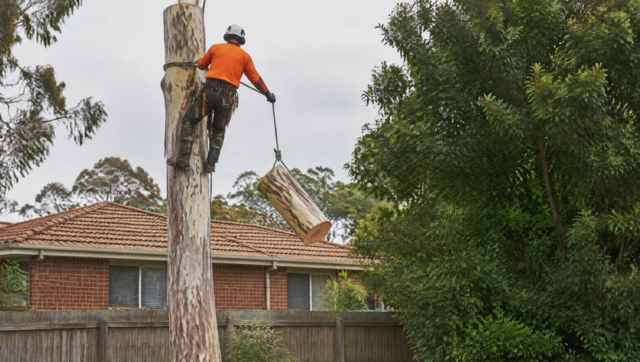
- Taking down hanging branches, deadwood or the whole tree.
Hiring an arborist for tree removal
We'd book the assessment before the removal. A written risk assessment from a consulting arborist answers the council's first question and tells you whether the whole tree really has to go. In NSW, we wouldn't let anyone start until the council's written OK is in your hand, however dead the tree looks.