
Why is almost every Hornsby tree protected?
Section 1.2.6 of the Hornsby Development Control Plan defines a tree as a long-lived woody plant with one or a few main stems and the potential to grow taller than 3 metres. A sapling counts if it could get there. Every tree is protected except the species in the DCP's exempt table, and on heritage items and in heritage conservation areas, all trees are.
Trees in an endangered or critically endangered ecological community need a permit whatever their size or distance from the house.
The rules are made under the NSW Biodiversity and Conservation SEPP 2021 and clause 5.10 of the Hornsby LEP. Our NSW permit page explains the state side.
Can building work near a tree need a permit?
Yes, and this one surprises people. The DCP needs a Tree Permit for construction or earthworks inside the tree protection zone of a protected tree (the area around it that has to be left alone during building work). That includes driveways, concrete slabs, retaining walls, changes in soil level and trenching.
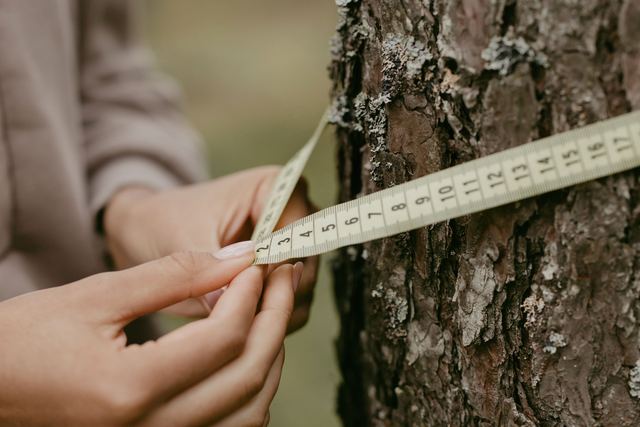
The DCP sets the zone by trunk diameter at breast height: 9 metres for trunks 800mm or more, 7 metres for 400mm to 800mm, and 4 metres for 400mm or less. Our tree protection zones guide explains how that plays out on a building site.
How to apply in Hornsby
Run the decision tool
Council's Tree Prune/Removal Decision Tool on its website shows whether your work needs a permit.
Get the owner's consent
The property owner completes the consent section. Tenants can't give permission, and strata or common property needs an authorised officer or the body corporate.
Lodge and pay
Apply through council's online services portal (ePathway), or on the Application to Prune or Remove a Tree form.
Plan the replacement
An approved removal should be replaced with a tree of like habit, indigenous to Hornsby Shire, planted nearby under council's Green Offsets Code.
What does a removal application need to show?
The DCP asks that a removal application show removal is appropriate, based on the tree's safe useful life and its risk to people or property, assessed with a recognised method such as TRAQ or QTRA (two tree risk assessment systems).
Council accepts arborist reports only if they follow its Guidelines for Preparing an Arborist Report. An AQF5 report, from an arborist with the Diploma of Arboriculture, may be needed where the tree is likely to fail or has less than 5 years of life left.
Council says these aren't valid reasons on their own to remove a healthy tree: leaf, fruit or sap fall, the tree being too large, views, solar access, or a landscaping preference.
Where the exemptions stop
The DCP lists some exempt works, such as removing a tree whose trunk base is within 3 metres of an approved building's foundation (detached garages and carports don't count), removing a tree under 3 metres tall outside native vegetation, and light pruning to the Australian standard. Each carries conditions.
None of them apply in heritage conservation areas, in locally significant or endangered ecological communities including their 50m buffer, or on land mapped Biodiversity in the Hornsby LEP. For a dead or dangerous tree, the DCP has council deem it so in writing first. Run the decision tool or call council before relying on any of it, and keep clear of a tree that's moving or split.
What happens after unapproved work?
Council says evidence is essential when it investigates and prosecutes illegal tree removal, pruning or damage, so photos and video matter if you report work you think wasn't approved.

Hornsby Shire Council tree removal permits: what to do next
We'd run council's decision tool, then look at whatever else is planned for the block. If a driveway, slab or retaining wall is going near a protected tree, that's a permit question too, so we'd sort the tree side before the builder starts. For a removal, get a report written to council's guidelines from the start, because council won't accept one that doesn't follow them.
Want an arborist to look at it?
Tell us the job and your postcode, and a local arborist calls you to talk it through.