
How does South Australia protect trees?
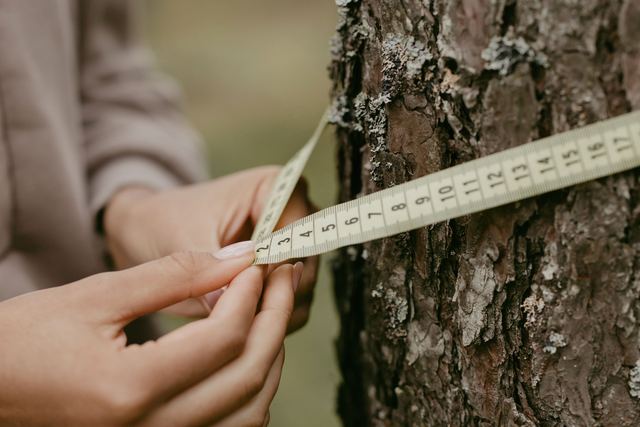
SA sets one test for everyone inside the Regulated and Significant Tree Overlay. A tree there is regulated if its trunk measures 1 metre or more around, and significant from 2 metres. Tree-damaging activity on either needs approval, and your council assesses it.
The overlay covers metropolitan Adelaide, townships in the Adelaide Hills Council area and parts of the Mount Barker Council area. The Planning and Design Code also declares some individual trees significant, listing examples in Adelaide, Burnside, Prospect and Unley. The SA Property and Planning Atlas lets you check whether the overlay covers your address.
SA lowered the trunk thresholds on 16 May 2024. Plenty of pages online still show the older rules, so go by the figures here or your council's current page.
Regulated or significant?
| Regulated tree | Significant tree | |
|---|---|---|
| One trunk | 1 metre or more around | 2 metres or more around |
| Several trunks | Total 1 metre or more, averaging 310 millimetres or more | Total 2 metres or more, averaging 625 millimetres or more |
| Measured | 1 metre above natural ground level | 1 metre above natural ground level |
| Also | Must be inside the overlay | Or declared individually in the Code |
What counts as tree-damaging activity?
More than cutting it down. Killing or removing the tree, cutting branches or the trunk, ring barking, topping or lopping and any other substantial damage all count, and excessive pruning can too.
Pruning only stays clear of approval if it removes no more than 30% of the crown, targets dead, diseased or risky branches, and comes at least 5 years after the last such prune. The approval requirement applies even where the Native Vegetation Act 1991 might allow the work.
City of Onkaparinga says removing a regulated or significant tree needs a development application lodged on PlanSA, and it needs an arborist report on a tree in danger of falling before it decides. Our Salisbury page covers one council's process in detail.
Where do the rules make room?
SA's rules list a few situations where council approval isn't required. One is a regulated tree within 3 metres of an existing home or in-ground swimming pool on the same block, but that never covers a Willow Myrtle, Angophora, Corymbia or Eucalyptus. Another is a list of 24 exotic species, including Box Elder, Silver Maple, London Plane and Weeping Willow. A third covers regulated or significant trees within 20 metres of a home in a Medium or High Bushfire Risk area.
Each has conditions, and getting one wrong can mean a large fine, so don't self-assess. Ask the council to confirm in writing before any work, and keep the reply.
Urgent work to protect a person or building is allowed, with the least possible damage to the tree. The council must then be told within 28 days of the work starting, and approval applied for afterwards.
What are the fines in SA?
Unapproved work on a regulated or significant tree can draw fines of up to $120,000, the City of Burnside warns. Tree workers get prosecuted too: Burnside reports a tree business owner convicted in October 2023 and fined $7,000 plus costs for felling a regulated tree, and an arborist fined $5,200 by the Environment, Resources and Development Court after a discount.
Councils can approve an application, approve it with conditions, or refuse it. Conditions can include replacement trees or a payment into an urban tree fund, and an applicant can appeal a decision to the Environment, Resources and Development Court within 2 months.
What about my neighbour's tree?
Neighbour tree disputes in SA fall under the common law of nuisance. You can usually remove roots or branches that cross onto your land, unless it's a significant tree, but you can't enter the owner's land or cut anything on their side. If the tree is regulated or significant, ask the council before cutting; an affected neighbour pays no fee to seek approval to lop a regulated tree on their side of the boundary.
You pay for that work, and can only recover it if it was needed to minimise existing or likely damage. Cut branches and roots stay the owner's and can go back over the fence if that causes no damage. If the owner won't pay for damage their tree caused, the Minor Civil Claims Division of the Magistrates Court can order the root or branch removed, or possibly the whole tree.
A strong, healthy tree blown down in a storm counts as an act of God, with no liability, and falling leaves, needles, nuts or twigs generally create none either. If you think a tree is dangerous, warn the owner in writing and keep a copy. More in our neighbours' trees guide.
Trees and power lines in SA
Stay at least 10 metres from a fallen powerline and anything it's touching, never try to move it, and report it to SA Power Networks. Call 000 as well if there's a fire or a life at risk. SA Power Networks looks after the clearance zone around all public lines, including private trees hanging over the road reserve. Lines past your connection point, such as private poles and lines between buildings, are yours to keep clear, using a qualified tree trimming contractor. For a tree or branch down on lines in a storm, the SA SES says to avoid the area until it's cleared.
Regulated and significant tree rules in South Australia: what to do next
We'd measure the trunk at 1 metre above the ground before anything else, then check whether the address sits in the overlay. If it's over 1 metre and inside it, we'd ask the council in writing before any work, even if one of the listed situations seems to fit. And if safety is the reason, we'd get an arborist report first, because councils such as Onkaparinga want one.
Want an arborist to look at it?
Tell us the job and your postcode, and a local arborist calls you to talk it through.