
Can tree roots damage a house?
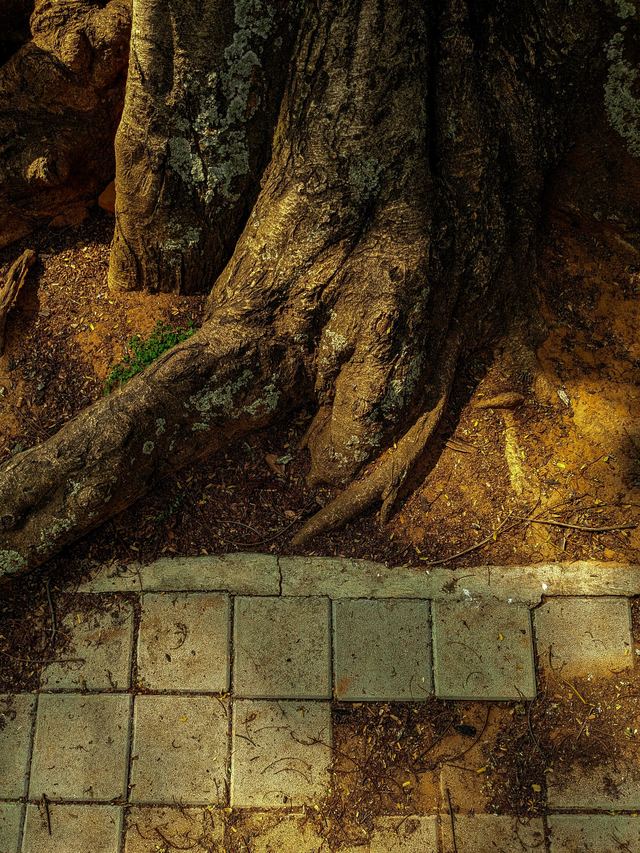
Some can. The Australian Native Plants Society says a Moreton Bay fig shouldn't go in the ground in a normal suburban garden, because its vigorous roots can damage pavements and house foundations. The City of Sydney avoids street tree species known for root systems that lift pavements.
Other culprits are less obvious. A Gardening Australia presenter told the ABC that a rubber plant, the familiar indoor fig, can grow outdoors into a large tree able to ruin paving, fencing or other infrastructure. Golden bamboo, a running bamboo, sends rhizomes (underground stems) several metres under fences, asphalt and concrete before they come up again.
That doesn't make every crack near a tree the tree's fault. Cracks have plenty of causes, and a big tree is an easy thing to blame, which is why the diagnosis comes first.
What about roots in pipes?
Here we'd be careful. We haven't found a reliable Australian source on how often roots break into sound pipes, so we won't guess.
What's clear is that a blocked or broken pipe is a plumber's job to diagnose first. Once you know where the problem is and what caused it, you'll know whether the tree is involved at all, and which roots an arborist would need to deal with.
What to do if you think roots are causing damage
Record it
Photograph the cracks, lifted pavers or damp patches with the date, so you can tell later whether they're getting worse.
Work out whose tree it is
Yours, a neighbour's or the council's. Street and nature strip trees have their own process, covered in our council street trees guide.
Get the right trade to diagnose it
A plumber for pipes. For cracks in the house itself, a builder or structural engineer can say whether roots are the likely cause.
Get an arborist's view of the tree
Which roots are doing the damage, which ones hold the tree up, and whether root pruning, a barrier or removal makes sense. See tree root removal.
Check the rules
Cutting roots can count as damaging a protected tree, so ask the council before any work.
Find the services before digging
Lodge a Before You Dig Australia enquiry before any trench is opened, so pipes and cables are located first.
Before anyone digs near roots
Lodge an enquiry with Before You Dig Australia (BYDA) at byda.com.au or through its app before digging starts, and agree with the contractor which of you is lodging it. BYDA plans are indicative only and may not show what's inside your boundary, and private services such as irrigation pipes or power run to a shed won't appear at all, so BYDA suggests a skilled locator on private property. Asset owners are encouraged to reply within 2 business days, so lodge it early. Lodging doesn't shift responsibility: anyone digging still has a duty of care around what's underground.
Why is cutting big roots risky?
Roots do two jobs: they feed the tree and they hold it up. Hume City Council's tree protection procedures describe the structural root zone (SRZ) as the roots and soil needed to keep a tree stable, and say that breaching it substantially increases the chance of the tree falling over.
Some trees cope worse than others. The City of Sydney notes that many eucalypts are adapted to well-drained, low-nutrient soils, which leaves them less tolerant of root interference such as compaction, waterlogging and damage.
So which roots can go, and how close to the trunk, is an arborist's decision. The Australian pruning standard, AS 4373-2007, has its own section on root pruning. In the ACT, harming a protected tree's roots by cutting, ripping or compacting the soil counts as damaging the tree. If you're planning building work, read our tree protection zones guide as well.
Do root barriers work?
A root barrier is a tough sheet or wall set into the ground between a tree and whatever you're protecting, so roots are turned away or down.
They're the standard answer for running bamboo. A Gardening Australia presenter told the ABC that a barrier for running bamboo means digging down about 600 millimetres and putting in concrete or another barrier, and Weeds Australia lists an underground barrier as one way to control golden bamboo.
Putting a barrier in beside an established tree means digging a trench close to it and cutting whatever roots are in the way, so it raises the same stability questions. Our root barriers page covers how arborists approach them.
What if the roots are from the neighbour's tree?
Talk to them first. In several states you can cut back roots that cross onto your land, usually at your own cost, but the details differ, and a protected tree can still need council approval before anything is cut.
A few examples. In Victoria it's part of the right of abatement, which covers roots as well as branches. Legal Aid WA says you can dig up and cut roots back to the boundary line, avoiding unnecessary harm to the tree, but you must never poison the tree or its roots. In South Australia, roots crossing onto your land can usually be removed unless it's a significant tree, and what you cut still belongs to the tree's owner.
If roots are damaging your property, there are processes for that. The Dispute Settlement Centre of Victoria mediates neighbour disputes including damage from roots, and in NSW the Land and Environment Court can deal with trees causing damage to property. Our neighbours' trees guide explains each state.
What you can do, and what's arborist work
You can
- Photograph and date any cracks or lifted paving
- Plant vigorous species such as big figs, rubber plants and running bamboo well away from the house, or not at all
- Pull out bamboo shoots and tree seedlings while they're small
- Lodge a Before You Dig enquiry before any digging
- Ask the council before any roots of a protected tree are cut
Leave to an arborist
- Working out which roots matter for stability
- Root pruning to the standard
- Root barriers beside established trees
- Reports for the council, your insurer or a neighbour dispute
- Removing the tree, if that's the answer

Tree roots near your house, pipes and paths: what to do next
We'd get the diagnosis before anyone picks up a saw. A plumber for the pipes, a builder or engineer for the cracks, then an arborist to say which roots can go and which hold the tree up. Cut the wrong root and a cracked path becomes an unstable tree, and in many places the council needs to agree first anyway.
Want an arborist to look at it?
Tell us the job and your postcode, and a local arborist calls you to talk it through.