
What a written tree quote should cover
- Which tree or trees, clearly identified, ideally with a photo or a mark on a plan
- The work in plain words: a removal, or the pruning named properly, such as deadwooding, crown thinning, crown lifting or reduction pruning
- How it comes down: in sections on ropes, from an elevating work platform, with a crane, or in one piece where there's room
- Access: which way the crew and gear come in, and whether a neighbour's yard is needed
- Protection for the roof, gutters, fences, garden beds, lawn and paving
- The stump: left, cut low or ground out, and to what depth
- The wood, branches and leaves: taken away, chipped and left as mulch, or cut for firewood
- The clean-up, and the state the yard will be left in
- The council permit: whether one's likely, who applies, and whether a report is part of it
- The business name, ABN and insurance
- When the work happens and how payment works
- What isn't included
How will the tree come down?
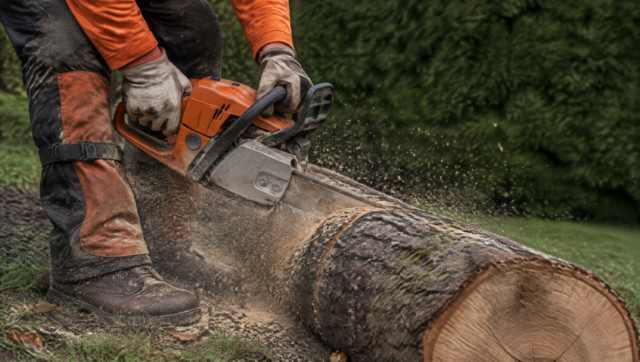
This line tells you a lot. A tree with open ground around it can sometimes come down in one piece. One over the house is usually taken apart in sections, with each piece lowered on ropes, or worked from an elevating work platform. A big tree in a tight spot may need a crane, which our large and crane removals page explains.
The method decides what needs protecting and how much space has to be kept clear. Safe Work Australia says an exclusion zone should be set up below or near a tree being worked on, so ask where cars, kids and pets need to be on the day.
The stump, the wood and the mulch
Gardening Australia describes two usual ways to deal with a stump: cut it to ground level and poison it, or grind it out for an even surface. If you want to plant, lay turf or pave over the spot, the quote should say grinding, and give a depth.
Depths vary by job. As one example, Mitchell Shire Council's standard for its own trees grinds each stump at least 30 cm below natural ground level and grubs out the surface roots. Safe Work Australia's guide says services should be checked before grinding goes deeper than 200mm, so the quote should also say who lodges the Before You Dig enquiry.
Some trees don't give up easily. Some eucalypts reshoot after being cut low, and Weeds Australia says tree-of-heaven has been reported suckering from its roots for at least 4 years after the tree is cut down, sometimes many metres away. A good quote mentions regrowth when it's likely.
For the wood and branches, look for whether they're chipped and left as mulch, cut into firewood, or taken away. Our stump grinding page and stump removal guide go further.
Access and protection
Ask how the crew will get in and what they'll put down first. Heavy logs and machines can mark lawn, crack paving, flatten garden beds and compact the soil over the roots of trees you're keeping.
If the work needs a neighbour's yard, the quote should say so. In NSW you need your neighbour's permission to go onto their land to prune, and in Victoria you need their consent before going onto their land for tree maintenance.
The permit, and who applies
A quote to remove or heavily prune a tree should deal with the council. Does the tree look protected? Who's lodging the application? Is an arborist report part of it? Some councils insist on one: the City of Onkaparinga in South Australia wants an arborist report before deciding on removing a tree in danger of falling, and Victoria's canopy tree clause needs an assessment by a suitably qualified person when health or stability is the reason.
Nobody should start until the approval is in writing. In NSW, even the imminent risk exemption only applies once the council confirms it in writing. Our tree permit pages cover each state.
Insurance, in writing
The quote should show the business name and ABN, and the arborist should happily send a certificate of currency for public liability. That cover matters more than people think, because a home policy may exclude damage to other people's property while someone you've hired is cutting trees, a common exclusion according to Financial Rights Legal Centre. Our guide to checking an arborist shows how to read the certificate.
Red flags in a tree quote
- A single figure with no description of the work
- Words like lop, top or hat-rack, or a promise to cut the tree back hard to make it smaller
- Nothing about the stump, the wood or the clean-up
- No mention of the council, or a line saying it doesn't matter
- Cash only, or full payment before any work is done
- No business name, ABN or contact details
- A deal that only holds if you agree today
If the tree is near a power line
The quote should say how the line will be handled. A tree on a street power line is the electricity network's job, not an arborist's, and networks only allow workers they authorise near their lines. Don't prune anything near a line yourself in the meantime. Our trees and power lines guide shows which network to call.
Questions to ask if the quote doesn't say
- Is the stump included, and how deep will it be ground?
- What happens to the wood, branches and leaves?
- What will you protect, and how?
- Who's applying for the permit, and will you wait for written approval?
- Will anyone need to go onto my neighbour's land?
- Is this a fixed quote, and when is payment due?
- What isn't included?
Before the arborist arrives
You can
- Photograph the tree, the access and what's under it
- Check the council's rules for your address
- Tell the neighbours when work is planned
- Clear cars, pots, furniture and toys from the work area
- Agree who's lodging the Before You Dig enquiry if a stump is being ground
Leave to an arborist
- Choosing the safest way to bring the tree down
- Setting the exclusion zone on the day
- All cutting at height, rigging and lowering
- Grinding the stump and checking for services
- Dealing with the network if a line is involved

Reading a tree quote: what to do next
We'd lay two quotes side by side and tick off the same list on each: method, protection, stump, wood, clean-up, permit, insurance. Anything missing, we'd ask about and get added before saying yes. The totals only mean something once both quotes describe the same job.
Want an arborist to look at it?
Tell us the job and your postcode, and a local arborist calls you to talk it through.