
Your state
Arborists and tree removal in Canberra and the ACT
One law for the whole territory, set by the tree's size.
In Canberra and across the ACT, the Urban Forest Act 2023 decides which trees need approval before work, and it goes by the tree's size, not by the suburb you're in.
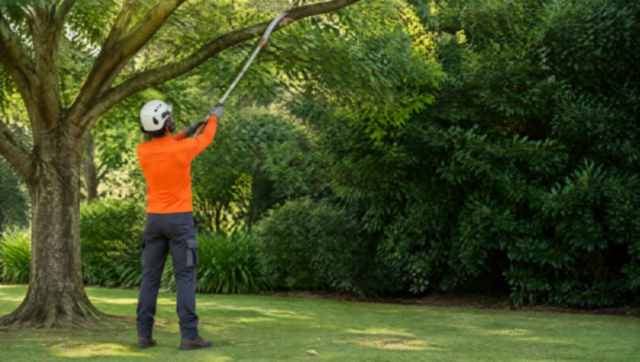
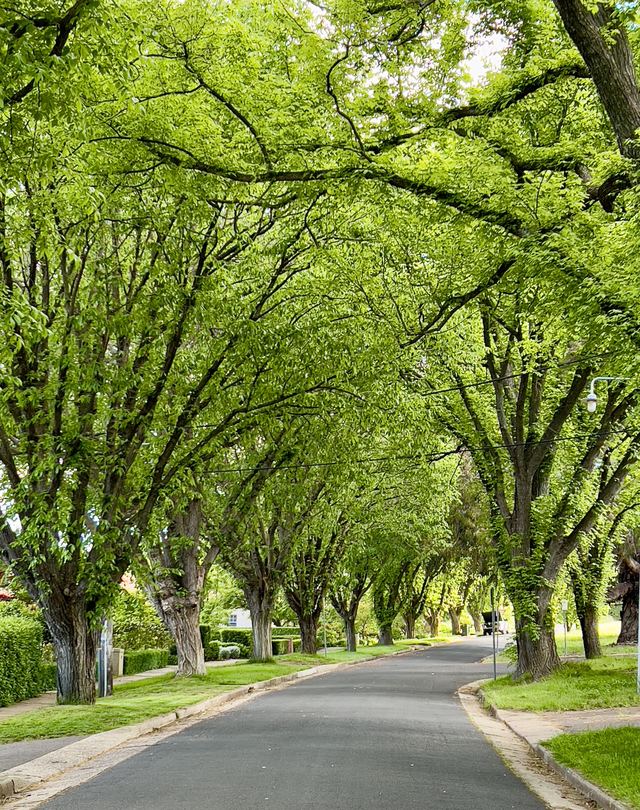
Which ACT trees are protected?
In built-up urban areas, a living tree on leased land is protected if it's 8 metres or taller, has a canopy 8 metres or wider, or has a trunk 1 metre or more around, measured 1.4 metres up. Some dead native trees, trees on the ACT Tree Register and recent canopy contribution plantings are protected too. ACTmapi shows whether a tree is.
Removing, lopping or major pruning (branches over 100 mm across) a protected tree needs approval first, through a tree activity application. That reaches over the fence too: an application for a neighbour's protected tree needs their written consent. The ACT permit page has the detail.
If an ACT tree is about to fall, or already has
Anyone in danger
Call 000.
Down on the house or across the driveway
Call the ACT SES. Volunteers make the damage safe, but they won't prune trees or take green waste away.
A private tree that's an immediate risk
Call Access Canberra and ask for an urgent circumstances authorisation. You may be asked for a photo, and you'll still lodge a tree activity application as soon as practicable.
Touching or bringing down power lines
Keep at least 8 metres away, fences included, since they may be live, and call Evoenergy.
Power lines on your block
Evoenergy says owners keep trees on their property clear of powerlines: most trees at least 1 metre from service lines and 1.5 metres from powerlines, and it suggests 2.5 metres to allow for regrowth. Once a tree has grown past the minimum, Evoenergy says trimming it is for an arborist authorised to work near its lines, and penalties may apply if you try it yourself.
Approval, then replanting
The decision-maker must decide a tree activity application within 35 working days, not counting time waiting for information it asked for. If removal is approved, you'll enter a canopy contribution agreement: City Services says that means two new trees on site, or a contribution for each one you can't replant.
If it were our block, we'd work out where two new trees could go before applying. For a big tree on a shared fence, we'd talk to the neighbour first, and City Services points people to the Conflict Resolution Service if talking doesn't settle it.
Cities in the Australian Capital Territory
Every suburb
Suburbs and tree services in the Australian Capital Territory
Your suburb's page has its council's tree rules, the trees that grow there and who to call about power lines. Not listed? Tell us your postcode with the job, and we pass it to a local arborist near you.
Tree permits in the Australian Capital Territory, council by council
Need an arborist in the Australian Capital Territory?
Pick the job and give your postcode, and a local arborist calls you.
More on Arborists and tree removal in Canberra and the ACT
Where this information comes from
- ACT Government, City Services (cityservices.act.gov.au) Tree protection laws, checked 3 November 2026
- ACT Government, City Services (cityservices.act.gov.au) Trees on private land, checked 3 November 2026
- ACT Parliamentary Counsel (legislation.act.gov.au) Urban Forest Act 2023 (A2023-14), Republication No 4, checked 2 January 2026
- ACT Government, City Services (cityservices.act.gov.au) ACT tree register, checked 3 November 2026
- ACT Emergency Services Agency, ACT State Emergency Service (esa.act.gov.au) ACTSES FAQ, checked 3 November 2026
- ACT Emergency Services Agency (esa.act.gov.au) What to do during and after a storm, checked 28 November 2022
- ACT Government, Access Canberra (accesscanberra.act.gov.au) Trees, grass and nature strips, checked 3 November 2026
- Evoenergy (evoenergy.com.au) Trees and powerlines, checked 3 November 2026
Tree rules change, so check with your council before anything is cut. How we write and check these pages.