
Which trees does Boroondara protect?
Boroondara runs its own Tree Protection Local Law 2024, in force since 28 May 2024. It covers two groups of trees on private land, including the part of a tree that hangs over your fence.
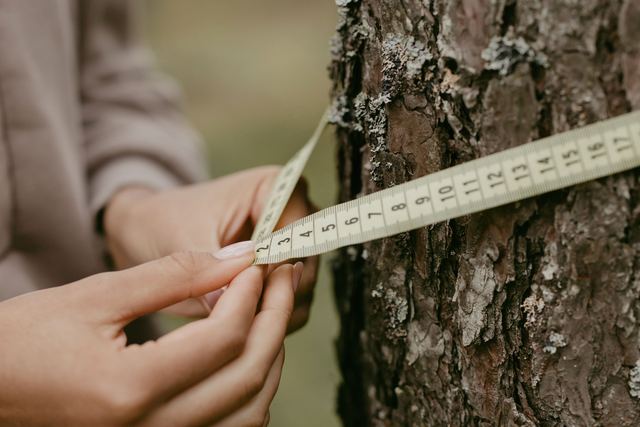
Canopy trees. Any tree whose trunk circumference (the distance around it) is 110 cm or more at 1.4 m up the trunk, or 150 cm or more at ground level. Several stems count together at 1.4 m. A tree the council measured as a canopy tree under its 2006 or 2016 local laws still is one.
Significant trees. Trees listed in the council's Significant Tree Study, first done in May 2001 and added to since. A listing can be one tree, an avenue or a hedge.
The part that surprises people: the council says a canopy tree needs a permit to come out even when it's dead or a recognised weed species. The Victorian permit page shows how this sits beside the state planning rules.
Canopy tree or significant tree: what needs approval?
| Canopy tree | Significant tree | |
|---|---|---|
| Removing it | Local law permit, even if dead or a weed | Local law permit, and only the council can approve it |
| Pruning it | Must meet AS 4373-2007; the council's page says this can go ahead without a permit | Permit needed |
| Works nearby | Permit for works within 2 metres of the trunk | Permit for works in its tree protection zone |
Building, digging or paving near a tree
The local law counts demolition, building, trenching, digging, compaction, excavation, fill and stacking materials as works. Within 2 metres of a canopy tree's trunk, or inside a significant tree's tree protection zone (12 times its trunk diameter, up to 15 metres), they need a permit first. The council can also ask for a security bond.
Boroondara also says boundary canopy trees fall under Clause 52.37 of its planning scheme: over 5 metres tall, trunk over 0.5 metres around at 1.4 metres, canopy at least 4 metres wide, within 6 metres of the narrowest street frontage or 4.5 metres of the rear boundary.
Gather these before you lodge
- A trunk measurement at 1.4 m along the trunk, plus one at ground level.
- A site plan or aerial image with each tree marked.
- Photos of the tree and the problem it's causing, such as lifted paving.
- Reports from anyone who's assessed the problem: a plumber, engineer or arborist.
- The owner's written consent if you're applying for someone else.
How a Boroondara permit application runs
Apply online
Use the 'Apply for a Tree Removal or Works Permit' form and attach the plan, photos and reports.
Council inspects
A qualified arborist visits the tree. The council may also notify your neighbours so they can comment.
Decision
Boroondara says it decides within 10 business days unless it needs more information.
Use it or appeal it
A permit lasts 12 months. If you're refused, you have 60 days to appeal, and the council says appeals take 2 to 3 months.
What if the tree comes down without a permit?
Boroondara says it can fine $4,070.20 per offence, give a formal warning, require replacement planting, or prosecute in the Magistrates Court.
The infringement for a dead tree is 5 penalty units rather than 20, but it's still an offence. And the landowner is guilty even if a contractor did the cutting, unless the owner proves it happened without their knowledge.
City of Boroondara tree removal permits: what to do next
We'd wrap a tape around the trunk at 1.4 m first. If it's close to 110 cm, we'd treat it as protected and lodge the application before asking anyone to quote. With a renovation coming, we'd raise the 2 metre zone while the plans are still drawings, and book an arborist only once the permit is in hand.
Want an arborist to look at it?
Tell us the job and your postcode, and a local arborist calls you to talk it through.