
What counts as assessable vegetation?
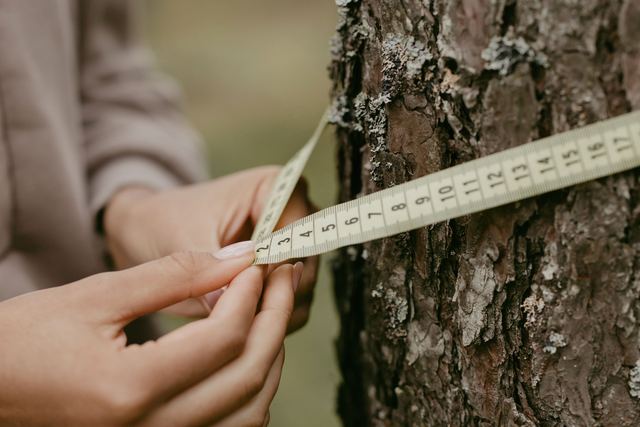
Council's test comes from City Plan and its vegetation management code. A tree is assessable if it's more than 4 metres tall, or its trunk is more than 40 centimetres around (the circumference, measured with a tape around the trunk) at 1.3 metres above the ground. That's a thinner trunk than most people picture, because it's measured around, not across.
Mapped vegetation counts too. Remnant vegetation, native understorey, disturbed or regrowth vegetation and wetland vegetation shown on the Vegetation Management Overlay Map are assessable whatever their size.
One quirk: council's page measures the trunk at 1.3 m for this test but at 1.4 m in its understorey rule. If your tree is close to the line, measure at both heights and ask council.
Council's accepted development list (each item has conditions)
- Vegetation along an existing or new boundary fence, within distances that vary by lot size
- Vegetation close to an approved house, shed or garage, again by lot size
- Vegetation within 1.5 metres of an existing pool fence
- Native understorey beneath taller canopy trees on lots under 1000 m²
- A pest tree species identified by an AQF Level 3 arborist
- Bushfire hazard vegetation around an approved dwelling on the Bushfire Hazard Map, where there's no approved bushfire management plan
- A tree that a Council Level 5 Arborist determines is actually or potentially dangerous
Two things catch people. The dangerous tree item names council's own Level 5 arborist, so a private opinion alone doesn't meet it. And council says none of these guidelines apply to land managed by a body corporate or in a community management scheme, so townhouse and unit owners should talk to the body corporate and council first.
Which pest trees does council name?
Council lists five: cocos palm (also called queen palm), coral tree, cadaghi, slash pine and umbrella tree. Council's accepted development list covers them once an AQF Level 3 arborist has identified the species, and it still tells landholders to check state and federal clearing rules first. Our palm trees page covers what removing a big palm involves.
How to lodge a Gold Coast tree removal application
Check the maps
Look up the lot on the Vegetation Management Overlay Map and the Bushfire Hazard Map in City Plan.
Fill in the State DA Form 1
Council's guideline says to choose Operational Work, Development Permit and Code Assessment, describe it as Private Tree Removal, and pick Clearing Vegetation as the nature of the work.
Draw the site plan
Use council's site plan for tree works and mark each tree clearly.
Lodge it
Apply online or at a customer service centre. Questions about tree removal applications go to council.
City of Gold Coast tree removal permits: what to do next
Wrap a tape around the trunk at 1.3 m before anything else. Over 40 cm, or a tree over 4 m tall, and we'd treat it as assessable and check the overlay map next. If you think the tree is unsafe, keep people clear and ring council early, because on the Gold Coast the list relies on council's arborist. When you get quotes, ask whether the arborist has lodged Gold Coast tree applications before, and who prepares the site plan.
Want an arborist to look at it?
Tell us the job and your postcode, and a local arborist calls you to talk it through.