
What does Brisbane protect?
The Natural Assets Local Law 2003 protects vegetation in bushland, wetlands, waterway corridors, and urban and rural areas. Council groups it into four categories: Council vegetation (street trees, park trees and natural areas), waterway and wetland vegetation, significant urban vegetation (mature or prominent native and exotic trees on private land) and significant native vegetation (anything native, from ground covers to big trees).
The waterway corridors and wetlands line up with the overlay maps in City Plan 2014. On top of the local law, a tree can be held by a development approval condition, a covenant on the title, a heritage listing or a Vegetation Protection Order.
Council also refers to significant landscape trees. Most exemptions below don't reach them, and work on one needs an AQF Level 5 arborist report.
Mangroves and other tidal vegetation are a state matter: the Queensland Department of Agriculture, Fisheries and Forestry issues those permits.
How do I find out if my tree is protected?
Ask council for a Protected vegetation enquiry. It emails back a map of the protected vegetation on the property and a PDF report. If the map leaves you unsure, ring council before anyone starts.
What council's fact sheet lists, for work inside your own boundary
- Pruning no more than 20% of the live foliage in any 12 months, spread evenly over the crown, to AS 4373-2007
- Removing a tree whose whole trunk is within 3 m of a lawful, occupied house on a lot up to 4,000 m², or 6 m on bigger lots
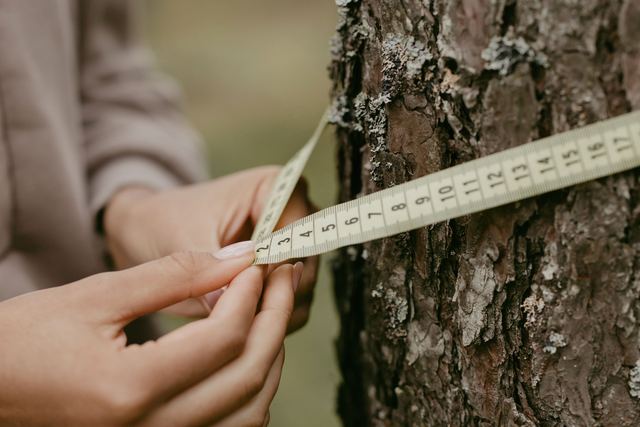
- Maintaining garden vegetation with a trunk under 30 cm at 1.4 m above ground
- Fence work on vegetation within 3 m of the boundary and under 20 cm trunk diameter
- Declared pest plants, though council says protected pest plant trees still need its permission
Council's wording, not ours, and none of it is a ruling on your tree. These exemptions don't cover significant landscape trees, council land, a neighbour's tree, or building work under a protected canopy. When measuring to the house, council says to measure from the far side of the trunk.
If a tree is splitting or leaning
Keep everyone out from under it, and call 000 if anyone is in danger. Council's fact sheet says removing a tree for an immediate hazard needs photo evidence, and an arborist report if asked, sent to council within 10 business days. Failing to show the threat was real can lead to compliance action, so photograph the split, the lean and any lifted soil before anything moves.
How to apply in Brisbane
Pick the permit
Short-term for one-off removal or pruning. Long-term, valid up to 10 years, for ongoing work, backed by a protected vegetation management plan. A minor street tree pruning permit is issued immediately.
Photograph and map the tree
Clear photos of the base, trunk and canopy, and a map of where the tree stands. Hand-drawn is fine.
Add the right report
An AQF Level 5 arborist report for a significant landscape tree. Council may ask for an arborist report or a tree risk assessment on other jobs, case by case.
Get the owner's sign-off
If you aren't the owner, include their signed approval or the body corporate seal.
Lodge and read the conditions
Applications have no fee. Council says it will contact you within 20 business days. Permits can require replacement planting, an offset payment, a fauna spotter catcher or a finish date.
What happens without a permit?
Council says penalties range from infringement notices to prosecution for serious offences, and it can also require rehabilitation, restoration or compensation.

Brisbane City Council tree removal permits: what to do next
Run the Protected vegetation enquiry before getting quotes, so you and the arborist both know which category the tree sits in. If it comes back as a significant landscape tree, allow time for an AQF Level 5 report and a permit before booking any work. Ask the arborist to put permit conditions, like replacement planting, in the written quote.
Want an arborist to look at it?
Tell us the job and your postcode, and a local arborist calls you to talk it through.